Are Toy Microscopes Worth It?
A toy microscope is worth it when it has real glass objective lenses with a credible numerical aperture, and not worth it when it leans on an inflated headline magnification number. Some are worth it, but many aren't — the difference is whether the microscope has real glass objective lenses with a credible numerical aperture, or whether it's leaning entirely on an inflated headline magnification number that the optics can't actually resolve.
The one thing to know: A compound microscope's real magnification ceiling is set by its objective lens's numerical aperture (NA), not the eyepiece number — a typical NA 0.65 objective resolves detail up to roughly ~650-1000x useful magnification; boxes advertising '1200x' or '2000x' on a toy scope are counting empty, resolution-free magnification.
A compound microscope's real resolving power comes from its objective lens's numerical aperture (NA) — a measure of how much of the light cone the lens captures. Multiplying a low-NA plastic objective by a high-power eyepiece produces a bigger image with no more actual detail: "empty magnification." That's how a toy microscope can print "1200x" or "2000x" on the box while showing a blurry, dim image at anything past a few hundred times.
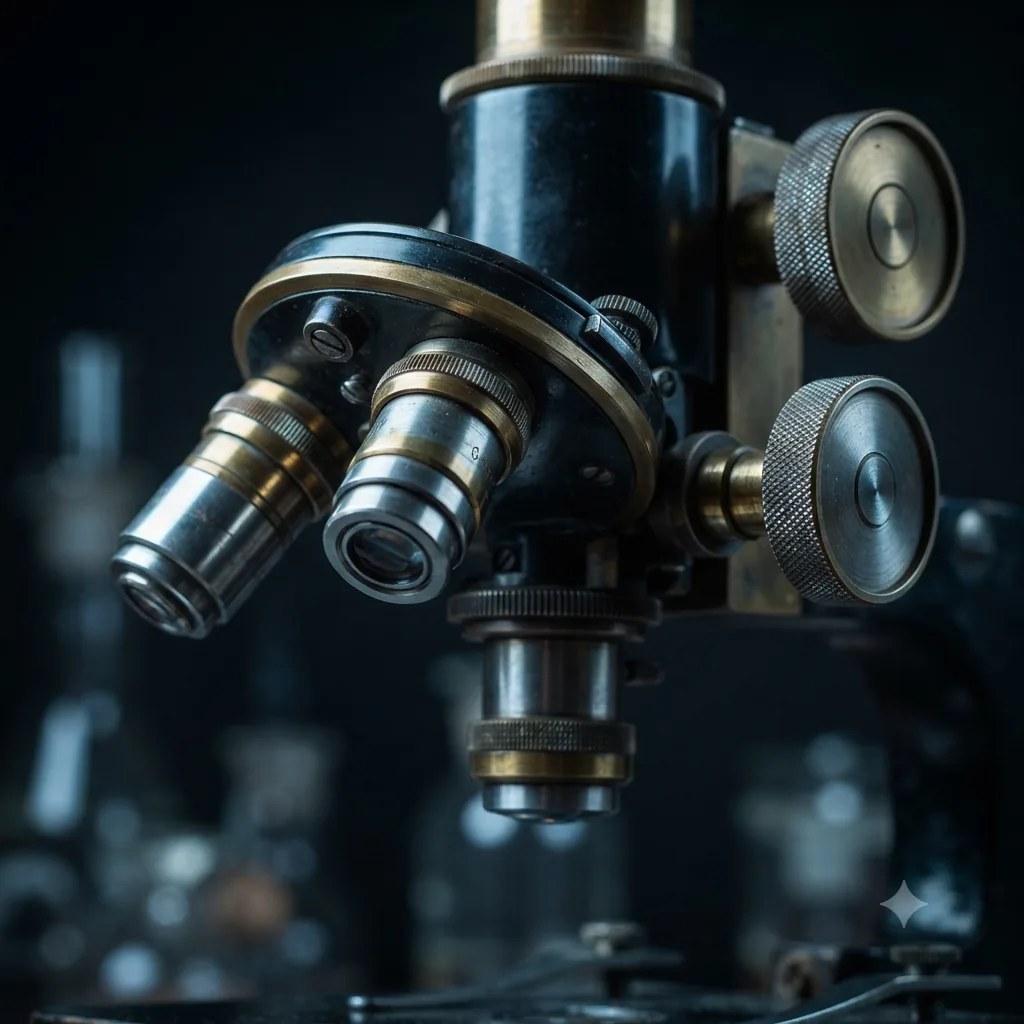
A worthwhile microscope for a curious kid will usually list a realistic range — something like 40x to 1000x with named glass objectives (4x, 10x, 40x, 100x) — rather than a single giant headline number with no supporting detail. See our picks organized by real optical quality at Best Microscope for a Curious Kid, and the full formula reference at The Science Gear Truth Numbers.
Frequently Asked Questions
It means the image is enlarged beyond what the lens can actually resolve in detail — a bigger but not sharper or more informative picture. It happens when a low numerical-aperture objective is paired with a high-power eyepiece.
No — some budget compound microscopes use real (if modest) glass objective lenses and deliver genuinely usable magnification up to a few hundred times. The tell is glass optics and a stated, credible objective range rather than a single huge headline number.
Look for glass (not plastic) objective lenses, a stated realistic magnification range (40x-1000x is typical for real compound scopes), and skip listings whose only spec is a single inflated number like '2000x' with no objective detail given.